Compare large and compact reducing tees with a DN125 45° elbow to plan welded HDPE water networks for distribution and project supply.
Pipeline design is rarely just about connecting two equal pipe ends. Branch diameter, directional changes, pressure class, and available installation space all affect the fitting schedule. For HDPE water and industrial systems, electrofusion fittings provide welded, thread-free connections in corrosion-resistant configurations. The right selection begins with matching each fitting to its specific role in the network.
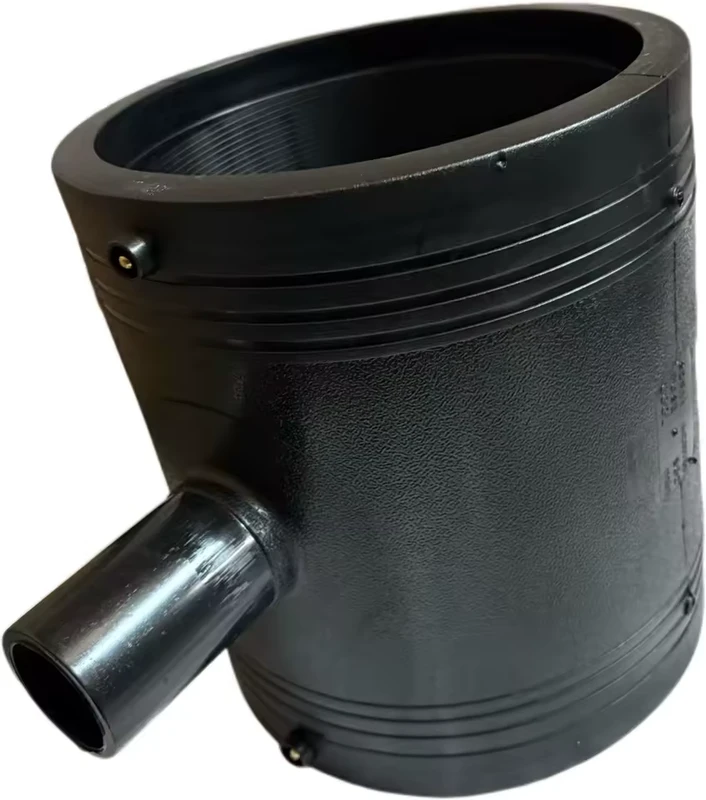
Reducing tees for different network scales
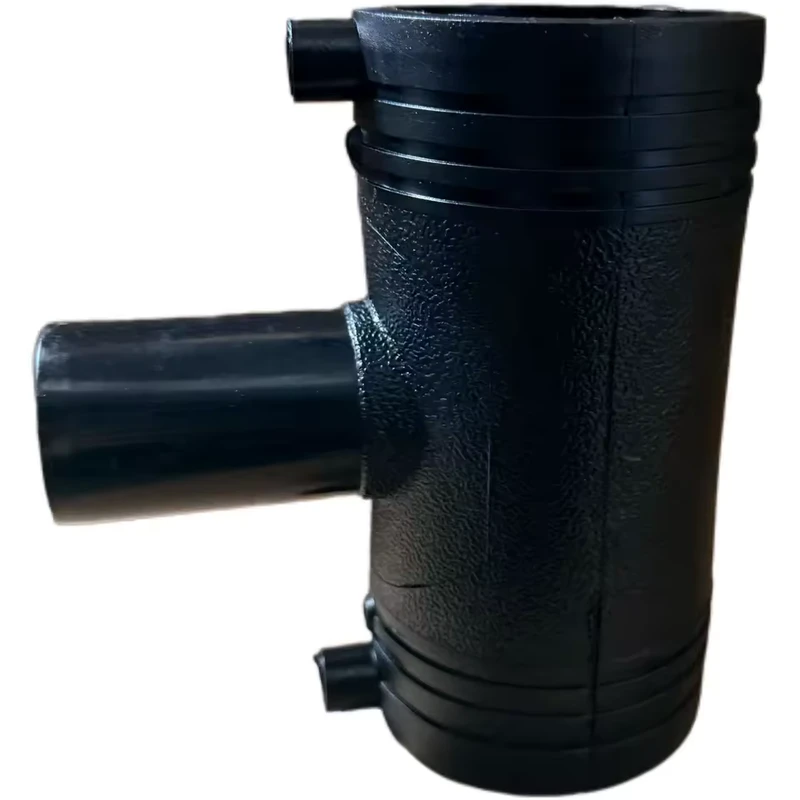
The large reducing tee connects a DN200 main line to a DN50 branch. Its listed overall length is 231 mm, with a height of 257 mm. This configuration addresses projects that need to draw a substantially smaller branch from a large distribution line while retaining an electrofusion connection method.
For smaller pipe layouts, the compact reducing tee combines DN63 and DN40 connections. Its stated 79 mm overall length and 156 mm height give designers and buyers clear reference points when assessing the required installation envelope. Both tee options are specified for PE100 or PE80 systems and PN10 (SDR17) or PN16 (SDR11) requirements.
Adding a controlled directional change
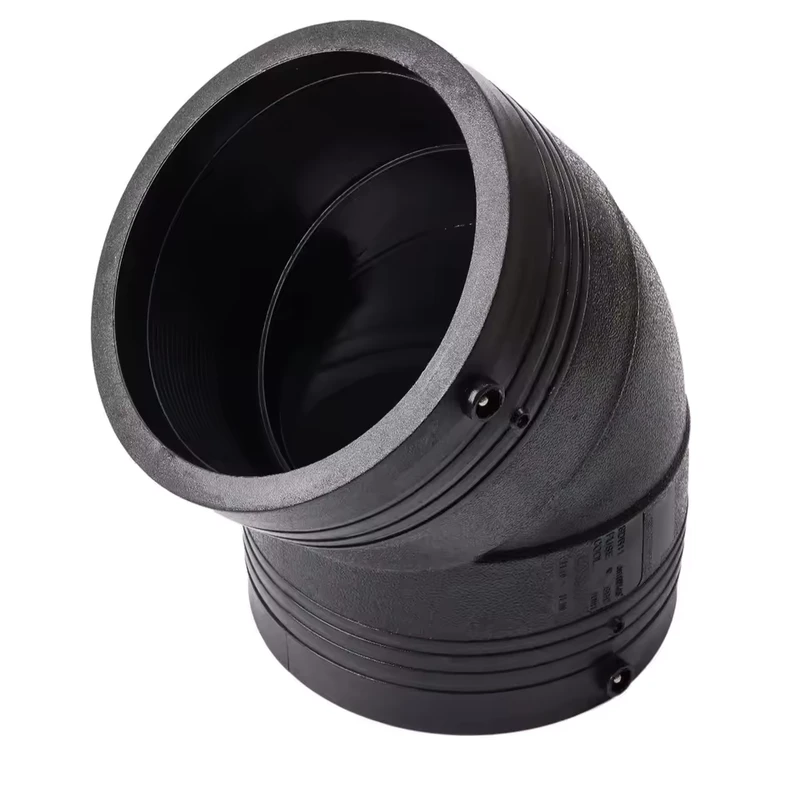
Branches often need to be coordinated with changes in pipeline direction. The DN125 electrofusion elbow provides a 45-degree turn for HDPE water or industrial piping. It has a listed overall length of 147 mm and height of 215 mm, helping project teams account for routing space before installation.
Importers, distributors, and project procurement teams should confirm pipe grade, SDR or PN class, dimensional requirements, fusion equipment compatibility, packaging, and documentation before ordering. Explore the broader plastic fitting range, or send your fitting schedule and target quantities to discuss supply options.